How does a 40,000-hour trio control a Rust server?
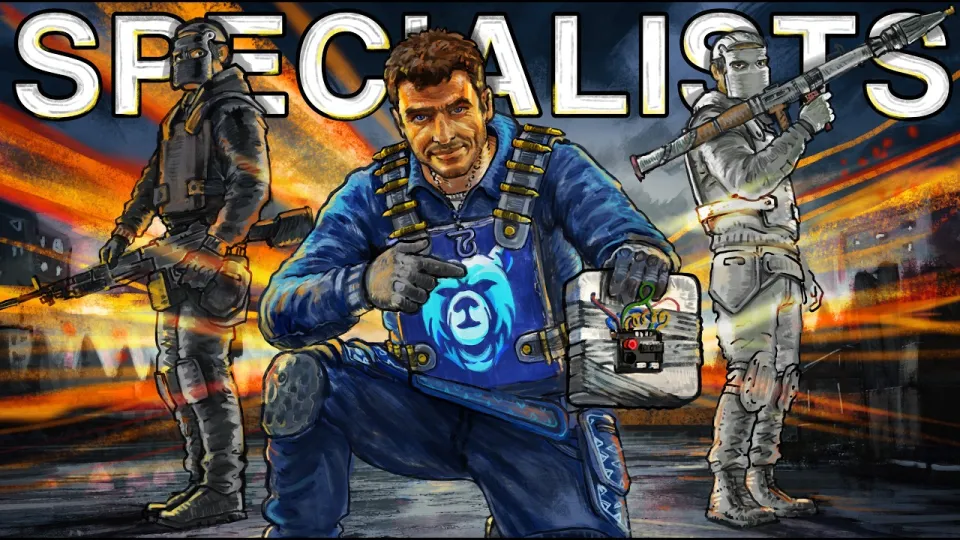
Video: How a 40,000-Hour Trio CONTROLS a SERVER - Rust
Need articles like this for your video? They help promote it on YouTube and Google — order them in the Telegram bot @sat_sit_bot. The bot writes and publishes the articles itself (with your YouTube video embedded) on popular topical websites (no ads). Try it free: 50 articles on us.
· based on the channel Blooprint
A 40,000-hour trio controls a Rust server by converting playtime into tempo: the group progresses faster than everyone else early, then uses the resulting gear and raid stock to remove competitors before they can catch up. In the Blooprint video, Blooprint, Disfigure and Nine take a 500+ population server from a quiet wipe start to open dominance, raiding the competition one base at a time. You can watch the sessions live and catch the full runs via Blooprint's Twitch channel.
What 40,000 hours actually buys a Rust trio
Experience in Rust is not about knowing more recipes; it is about removing hesitation from every decision. A group with tens of thousands of combined hours does not debate whether to contest a drop, whether to push a fight or whether to spend explosives on a base — those calls are already made by pattern recognition.
The practical advantages stack up in a specific order:
- Faster wipe start. Knowing the exact monument route, the fastest way to a workbench and the cheapest path to a gun compresses the first hours into a fraction of what an average group needs.
- Better resource math. Veterans know how much sulfur a raid costs before they craft a single rocket, so stockpiling is targeted rather than random.
- Cleaner fights. Aim is only part of it; positioning, audio reads and knowing when to disengage decide most 3v3 and 3v6 exchanges.
- Fewer losses. Gear fear disappears, but so does recklessness — the trio roams with top-tier kits like the M2 and L9 because they expect to keep them.
The result is a snowball: each successful fight funds the next raid, and each raid removes a group that could have threatened the base later.
How the trio turns a fresh wipe into map control
Map control in Rust is a sequence, not a single event. The trio's pattern on a high-population server follows a recognizable curve.
First comes the progression phase: secure a base location with good monument access, push through the workbench tiers, and get to a combat-ready kit as fast as possible. On a 500+ pop server this phase is contested, so speed is the only real defense.
Next is the consolidation phase: farm sulfur with purpose, craft explosives, and pick targets that pay for themselves. Raiding a group that holds a good compound both removes a rival and transfers their stockpile to you.
Finally comes the dominance phase, which is what the video documents: raiding all of the competition, absorbing loot, and defending against the inevitable online attempts from groups trying to break the streak. The trio's base design and stored gear make those defenses survivable, which is exactly why the run escalates instead of collapsing.
Why raiding everyone is a strategy, not just content
Raiding every competitor looks like aggression for the camera, but on a crowded server it is risk management. Every group left untouched keeps farming sulfur, keeps growing, and eventually becomes the group that online-raids you at an inconvenient moment.
A trio cannot hold territory against a whole server by defending alone. By attacking first, the trio chooses the timing, the target and the terms of every engagement. Explosives spent on a rival's loot room are an investment in a quieter map — and the loot inside usually refunds part of the cost.
This is also where the trio's discipline shows. Successful raid groups do three things consistently:
- They scout before they spend, checking for online players, turrets and honeycomb depth.
- They split roles during the raid: one player breaches, one holds the angle, one manages loot and counters.
- They expect a counter-raid and prepare a fallback, rather than treating the explosion as the end of the fight.
The habits that separate veterans from high-hour players
Hours are a proxy, not a guarantee. Plenty of players log thousands of hours without ever controlling a server, because they repeat the same loop: farm, build, lose kit, repeat. The trio in the video shows the habits that break that loop.
Role clarity. One player builds and manages the base, one takes primary fights, one coordinates rotations and information. Nobody duplicates work, so the group's effective output is higher than three solo players sharing a base.
Information discipline. Callouts are short and consistent, and the group acts on them immediately. In a 3v6, the side that shares information faster usually wins regardless of gear.
Economy awareness. Veterans treat sulfur, scrap and components as a budget. They know what a raid costs, what a defense costs, and when a fight is not worth the ammo.
Composure under pressure. Online raids are the real test, and the trio's calm during defenses is what keeps the run alive. Panic loses more bases than explosives do.
Common questions from viewers of the run
Viewers who do not play Rust often ask how a group can dominate a server so quickly without cheating. The answer is preparation: a coordinated trio with deep game knowledge can out-tempo a larger, less organized group, and the video shows the decisions behind that tempo rather than a single lucky fight.
Another recurring question is whether roaming with expensive gear is reckless. For experienced players it is the opposite — top-tier kits exist to be used, and keeping an M2 or L9 in a box protects nothing. The risk is priced in, and the fights that gear wins pay for the next set.
People also wonder how a small group survives the attention that comes with raiding everyone. The answer is base design, stored defensive supplies and the willingness to defend online rather than log off. That combination is why the trio's wipe escalates instead of ending in a single bad night.
Useful links from the run
- Blooprint on Twitch — live streams of the wipes
- Blooprint on Kick — alternative stream
- Blooprint on TikTok — clips and highlights
- Blooprint on Twitter — schedule and updates
- Blooprint Discord — community and wipe announcements
Final takeaway
A 40,000-hour trio controls a Rust server because experience compresses every phase of the wipe: faster starts, cheaper raids, cleaner fights and calmer defenses. Blooprint, Disfigure and Nine turn a 500+ population server into a sequence of manageable problems, and the raids on the competition are the visible result of that process. The Blooprint channel is the place to follow the full story, and the live sessions are on Twitch if you want to watch the next wipe unfold in real time.
Key takeaways
- Blooprint, Disfigure and Nine bring roughly 40,000 combined hours into a single trio wipe.
- The wipe runs on a 500+ population server, where competition for monuments and loot is constant.
- The trio's edge comes from tempo: fast early progression, then raids on every competing group.
- Content from the run was published on the Blooprint channel and streamed at twitch.tv/blooprint.
- Hours matter less than role clarity: builder, fragger and coordinator split the work.
Source: How a 40,000-Hour Trio CONTROLS a SERVER - Rust · Markdown version
Questions & answers
How can three players dominate a server with hundreds of others online?
A coordinated trio out-tempoes larger but less organized groups. They progress faster at the start, fund raids with the loot they take, and remove competitors before those groups can build up sulfur. Numbers matter less than timing and role clarity.
Is roaming with an M2 or L9 in a trio a good idea?
For experienced players, yes. High-tier gear is only valuable if it is used, and keeping it stored protects nothing. The trio accepts the risk because the fights that gear wins usually pay for the next kit.
Why raid every competing group instead of just defending the base?
Raiding first lets the trio choose the timing and terms of each fight. Every untouched group keeps farming sulfur and grows into a future threat, so spending explosives on rivals is a way to buy a quieter map.
Does playtime alone make a player good at Rust?
No. Thousands of hours can be spent repeating the same farm-build-lose loop. What separates veterans is role clarity, information discipline, economy awareness and composure during online raids.