Marvel Rivals Twitch Highlights Versus Full Match VODs for Learning the Game
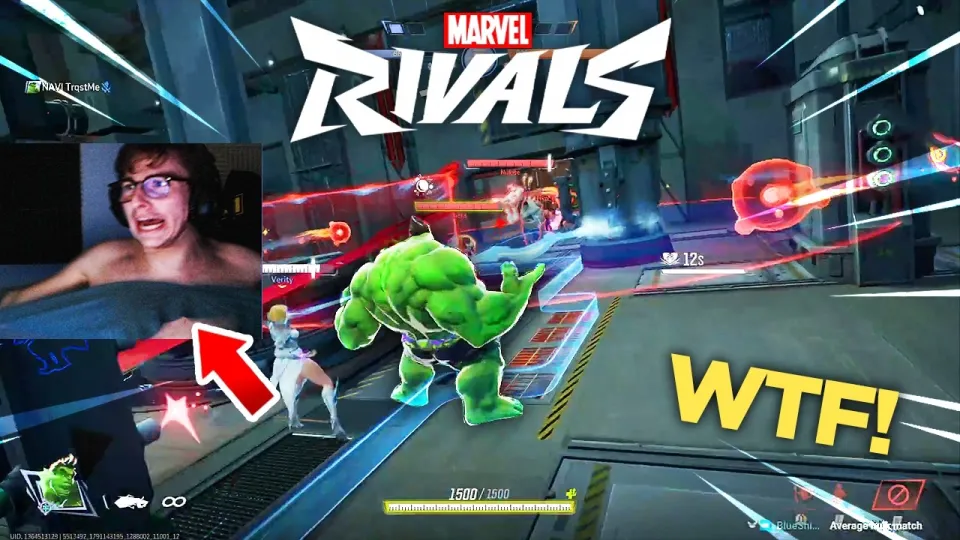
Video: Marvel Rivals MOST VIEWED Twitch Clips of The Week! #86
Need articles like this for your video? They help promote it on YouTube and Google — order them in the Telegram bot @sat_sit_bot. The bot writes and publishes the articles itself (with your YouTube video embedded) on popular topical websites (no ads). Try it free: 50 articles on us.
· based on the channel Rivals Guides
Marvel Rivals Twitch highlight montages are the faster way to learn what the meta looks like right now, while full match VODs are better for actually copying a player's decisions. Weekly clip roundups such as Rivals Guides episode #86 give you dozens of high-level moments in under half an hour, but they cut out the setup that made those moments possible. If you want entertainment and a quick read on what is strong this week, watch the clips; if you want to climb, watch the full games and treat clips as a trailer. Viewers who want to support the channel's clip work can also pick up a discount through the Gamer Supps creator code GUIDES, which takes 10% off the store.
What the Marvel Rivals most viewed Twitch clips format actually delivers
The format is a curated montage of the week's most-watched Marvel Rivals streams, assembled by an editor rather than played out live. Rivals Guides episode #86, published on 9 October 2026, pulls from a source list of more than 35 Twitch channels, among them Necros, Jay3, Hydrates, Arrge, Somjuu, Slushii, BigPuffer, Suppress, VESWA, Woofles, Dafran and TrqstMe. That breadth is the point: in one sitting you see Wolverine, Psylocke, Invisible Woman, Loki, Peni Parker, Elsa Bloodstone, Groot and Gorr moments from players across ranked and casual queues.
What you get out of it:
- A snapshot of which heroes are generating highlight-level plays in the current season 10 meta.
- Streamer reactions and rage moments that show how punishing single mistakes can be.
- Funny fails that illustrate map hazards and ultimate misreads as clearly as any tutorial.
- Short, repeatable clips you can rewatch to study one specific interaction.
What you do not get is the 20 minutes of positioning, ult economy and comms that set each clip up. The montage shows the punchline, not the joke's construction.
How to read the clips like a coach instead of a spectator
Treat every highlight as a question about the decisions that led to it, not as a combo to copy blindly. When a Wolverine ultimate lands on multiple enemies, the interesting part is how he got behind them and whether the enemy support had already burned their defensive cooldowns. When a Psylocke player complains that her ultimate failed to secure kills, the useful lesson is about what her ult can and cannot brute-force through.
A practical routine for each clip you find impressive:
- Identify the hero and the map, then ask what cooldown the opponent was missing.
- Note whether the play depended on a teammate's setup, such as a Groot wall, a Loki lamp or a support ultimate.
- Check the escape route; many montage deaths, including repeated falls off the same ledge, come from committing to a fight with no exit.
- Write down one habit you can test in your next match rather than trying to recreate the whole sequence.
This is where the clip format beats a raw VOD for beginners: you see the outcome first, so the underlying mechanic is easier to remember. Experienced players will usually want to reverse the order and watch the full game first.
Where the highlight montage falls short compared to a full VOD
A full VOD shows the boring parts, and the boring parts are where most of the learning lives. In a 30-minute ranked game, a top streamer spends most of the time rotating, holding angles, tracking enemy ultimates and deciding when not to engage. A weekly clip compilation compresses that into seconds of action, which is great for pacing and poor for building game sense.
Concrete gaps in the montage format:
- No draft context: you rarely see the full team composition that made a play possible.
- No ult tracking: the reason a Psylocke ultimate got no value is often that a defensive ultimate was already available.
- No failure analysis: a clip of a player falling off the map is funny, but the VOD shows whether it was a movement error, a knockback or a panic jump.
- No repetition: pros run the same hero across many games, and the patterns only become visible over a full session.
The best compromise is to use the montage as an index. Spot a hero or player you like in the roundup, then go watch that streamer's full broadcast for the same week.
Common viewer questions about clip roundups and streamer culture
Viewers of these compilations tend to raise the same three doubts, and each has a straightforward answer. The first is about credibility: a channel that publishes clips rather than guides can still be a useful discovery tool, because it surfaces players you would not otherwise find. The second is about fairness to the players featured: a single bad ultimate or a fall off the map does not define a streamer's skill level, and even top-ranked players have lowlight games. The third is about taste: some viewers find certain streamers' staged reactions repetitive, while others watch precisely for that energy.
On the mechanical side, the most frequent arguments in the comments are about ultimates. Psylocke's ultimate is not a guaranteed kill button; it can be countered by healing structures and defensive support tools, so blaming the hero for a failed dive usually misses the real mistake. Invisible Woman draws similar debate, because a player who keeps an opposing Invisible Woman occupied for most of a fight has often done more for the team than the scoreboard suggests. Reading those arguments with the hero kits in mind is more useful than picking a side.
What the episode tells you about the current Marvel Rivals meta
A weekly roundup is an accidental meta report: the heroes that appear most often in highlights are the ones streamers are picking and viewers are clipping. Episode #86 leans heavily on dive and disruption heroes, with Wolverine and Psylocke generating the most discussion, alongside support play from Invisible Woman and Loki and tank presence from Groot and Peni Parker. Gorr's appearance in the tag list reflects his ongoing presence in the season 10 conversation.
How to use that signal responsibly:
- Treat frequency as popularity, not proof of tier strength.
- Check whether the clips come from ranked or casual lobbies before drawing conclusions.
- Cross-reference with your own matches; a hero that dominates clips may simply be more clip-friendly.
- Watch for counterplay in the same montage, such as a defensive ultimate shutting down a dive.
The roundup is a starting point for that homework, not a substitute for it.
All the links from this week's episode
Everything referenced around the video is collected here so you do not have to scrub through the description. The main promotional link is the Gamer Supps store page with the creator code applied: https://gamersupps.gg/GUIDES. The channel's social accounts are https://x.com/MRivalsGuides, https://www.tiktok.com/@MrivalsGuides and https://www.instagram.com/MRivalGuides. Clips featured in the episode come from the individual Twitch channels credited in the video description, and removal requests go to the email address listed there.
The verdict on Marvel Rivals clip roundups versus full VODs
Weekly highlight compilations win on time and entertainment, while full VODs win on depth and transferable skill. For most players the right answer is both, in that order: watch the Rivals Guides roundup to find heroes, players and interactions worth studying, then open a full broadcast to see how those moments are built. Episode #86 is a solid entry point because its source list spans more than 35 streamers, from pro-level ranked grinders to variety streamers, and the comment section alone is a decent debate about ultimate value and clip farming. If the channel's editing saves you time, you can return the favor by grabbing the 10% discount through the Gamer Supps link with code GUIDES. Rivals Guides deserves the credit for assembling the breakdown; the next step, watching the full games, is yours.
Key takeaways
- Rivals Guides posted episode #86 of its weekly Marvel Rivals Twitch clip roundup on 9 October 2026.
- The episode compiles clips from more than 35 streamers, including Necros, Jay3, Hydrates, Arrge, Somjuu and Slushii.
- Viewer debate in the comments focuses on Psylocke ultimate expectations, Wolverine ultimate value and streamer clip farming.
- Gamer Supps purchases through the creator code GUIDES get 10% off via gamersupps.gg/GUIDES.
- Clip montages show outcomes; full VODs show the positioning and cooldown decisions behind them.
Source: Marvel Rivals MOST VIEWED Twitch Clips of The Week! #86 · Markdown version
Questions & answers
Are Marvel Rivals Twitch highlight montages good for learning the game?
They are good for discovering heroes, players and interactions quickly, because a weekly roundup packs dozens of high-level moments into a short video. They are weak on context, since the positioning, cooldown tracking and team composition behind each clip are cut out. Use them as an index and watch full VODs for the actual decision-making.
Why does Psylocke's ultimate sometimes fail to get kills in these clips?
Psylocke's ultimate is not a guaranteed kill button and can be neutralized by healing structures and defensive support tools such as Loki's lamp. When a dive ultimate gets no value, the mistake is usually that it was used into available counter-cooldowns. Checking what the enemy team still had ready explains most failed dives.
Is it fair to judge a streamer's skill from a single bad clip?
No. Even top-ranked players have games where they fall off the map, miss an ultimate or lose a duel badly, and a montage selects for the most dramatic moments. A single lowlight says more about the editor's selection than about the player's overall level. Judge skill from full sessions rather than isolated clips.
Why do some viewers dislike staged or repeated streamer reactions in clip compilations?
Clip roundups reward loud, repeatable reactions because they are easy to clip and easy to watch out of context. Viewers who follow the game closely often find the same persona repetitive after several weeks. Others watch specifically for that energy, which is why editors keep including those moments.